Tag: museum

  • New publication: a historical calendar

    New publication: a historical calendar

    I have recently selected the photos and written the captions for the Berlevågkalenderen for 2026. This is a historical calendar published by the Berlevåg Harbour Museum. It’s goal, as I see it, is to disseminate different aspects of the local history. The calendar’s been published since the 90s (to my knowledge) and so it’s an honour to have been behind the entire production.
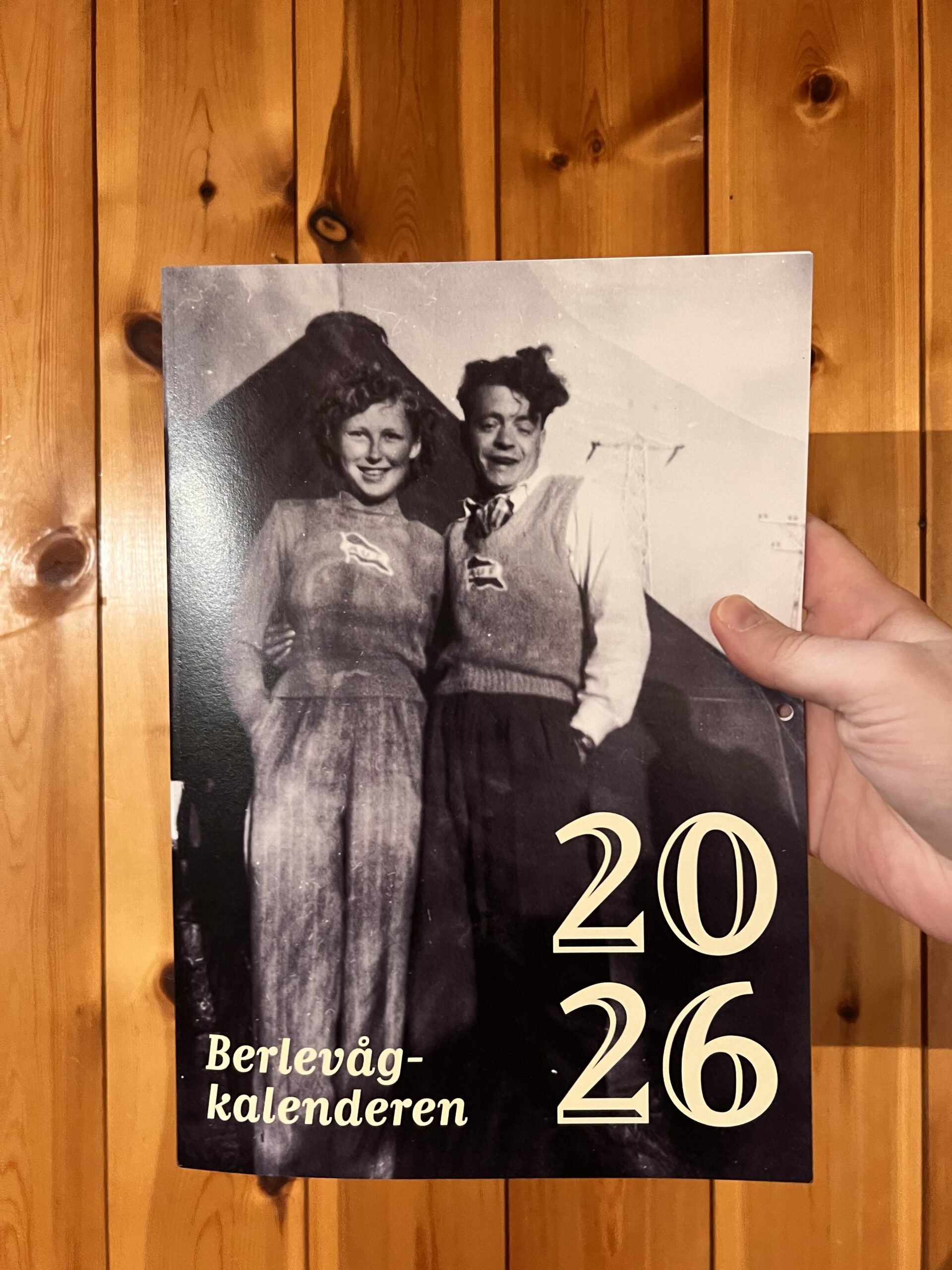
    Selecting the images was a lengthy process. The photo archive database at my museum has some 5,000 objects —and that’s excluding the ones that have yet to be registered. Writing the captions involved using both the information already registered in the database (based on what informant’s could tell my predecessors about the photos) and retrieving new information from informants or by doing archival research. In my case, the digitised archive of Norwegian newspapers on the National Library’s website was invaluable.

    Working on this has been a wonderful experience. It’s given us a chance to improve our database with new information and in some cases correcting erronous information —usually pertaining to dates. It’s also a wonderful way of getting glimpses into easily overlooked facets and pockets of local history, and to tie that history to both regional, national, and global ones.

    The entries in the calendar range from a brutal murder in the 1890s to the opening of the public swimming pool in 1962; from an émigré to America in the early 1900s to a photo of my grandmother in a wintery landscape outside a house she bought, taken around 1990. Together the images tell stories of travel in its multiple meanings.

    If anyone of my readers want to purchase the calendar for 190 NOK (around $19 or £15), plus shipping, feel free to email: post@berlevagmuseum.no.

    Many thanks to Rudi Grafisk for the graphic design and Kraft Digitalprint for printing the calendars. Speaking to informants would have been impossible without the generous help of the local history society, who also looked through the proposed images and commented on them.

    This blog post has also appeared on my Substack.
  • Course certification: GIS

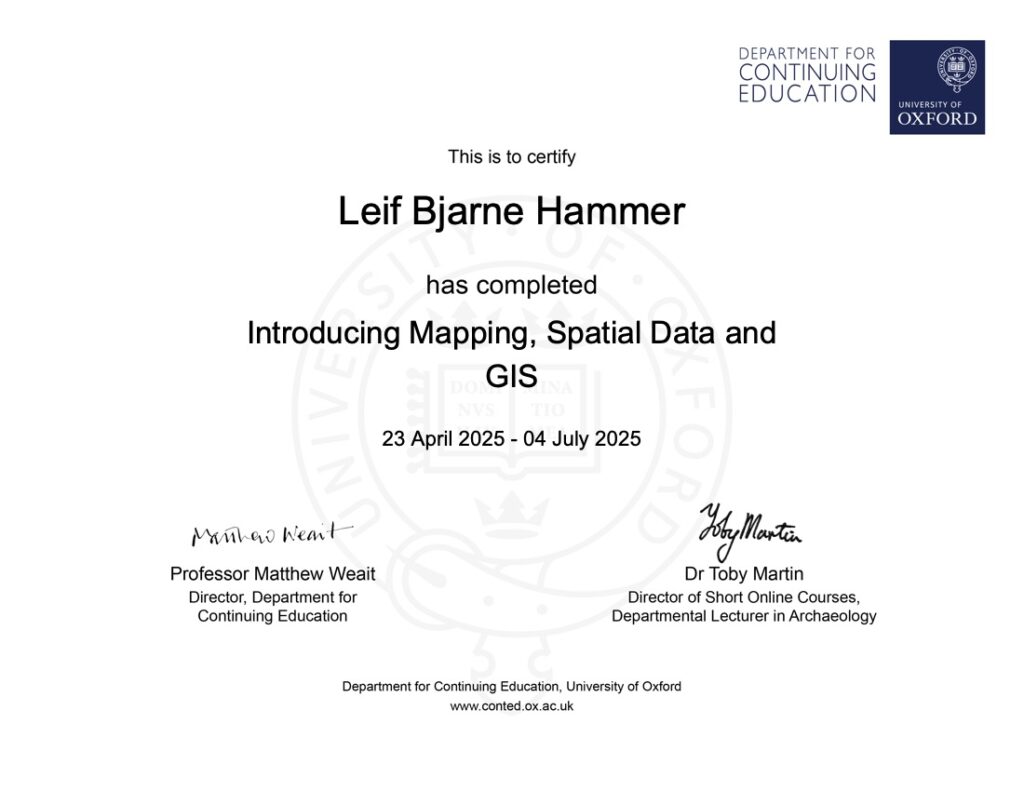
    I am pleased to announce that I have finished the online course Introducing Mapping, Spatial Data and GIS from the Department for Continuing Education at the University of Oxford, which ran from 23 April to 4 July 2025.

    The course has allowed me to explore ideas and uncertainties that underpin the creation and use of spatial data and maps. I have explored the GIS software QGIS and produced my own georeferenced historical map.

    I decided to join the course because I want to create my own maps for my DPhil thesis but I also look forward to delving deeper into using GIS in the future — both for my own work as a historian and museum head.

  • Career news: Museum department head

    I will be joining the Museums for Coastal Heritage and Reconstruction in Finnmark, Norway, as head of one of their six museums.

    From late June 2025, I will be taking over the role as Museum Department Head for one of the six museums in the group Museums for Coastal Heritage and Reconstruction in Finnmark (Museene for kystkultur og gjenreising i Finnmark), also part of the larger consortium Museums of the Norwegian Coastal Administration (Kystverkmusea).

    I look forward to taking on this role and to continuing the great work my predecessor did in fascilitating the museum’s position as a key cultural institution in the local community. I look forward to working with local history and to expanding the museum’s collections to include more recent history and to placing that local history in a regional, national, and international context. Together with the group, and its head of research, I hope to work together on research projects and look to collaborate with other museums and research groups in the Nordic countries.

    There are many overlooked facets in the Finnmark region’s fascinating history that I think it is time to explore. In these uncertain times, I think local communities are a corner stone, and knowing one’s local history and how people in the past —in that paticular space— have responded to challenges and persevered is more important than ever and a source of inspiration and meaning.

    With my DPhil slowly nearing its end (I look to submit in the coming months), I cannot wait for this next chapter. Of course, I will be keeping you all posted about what happens.